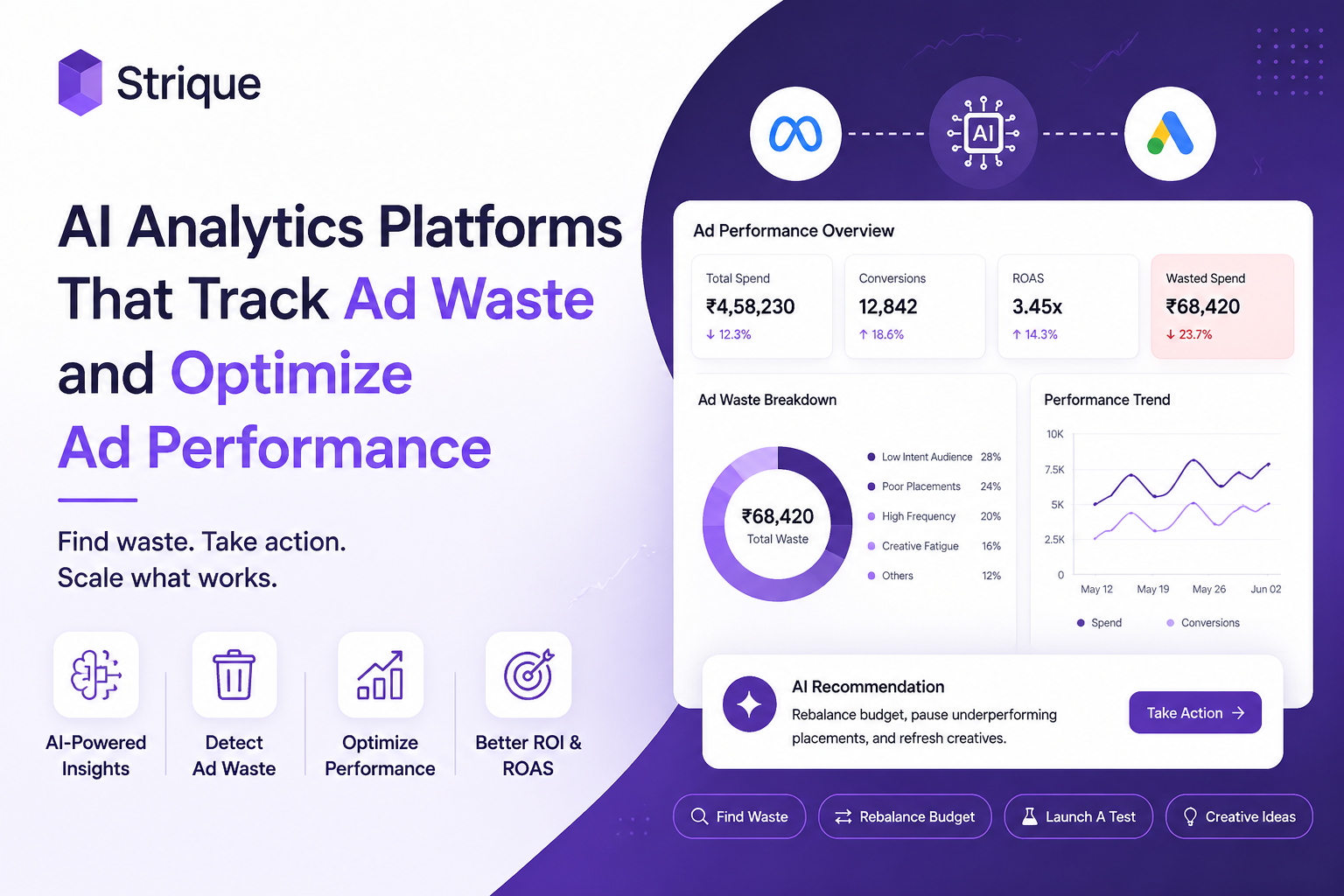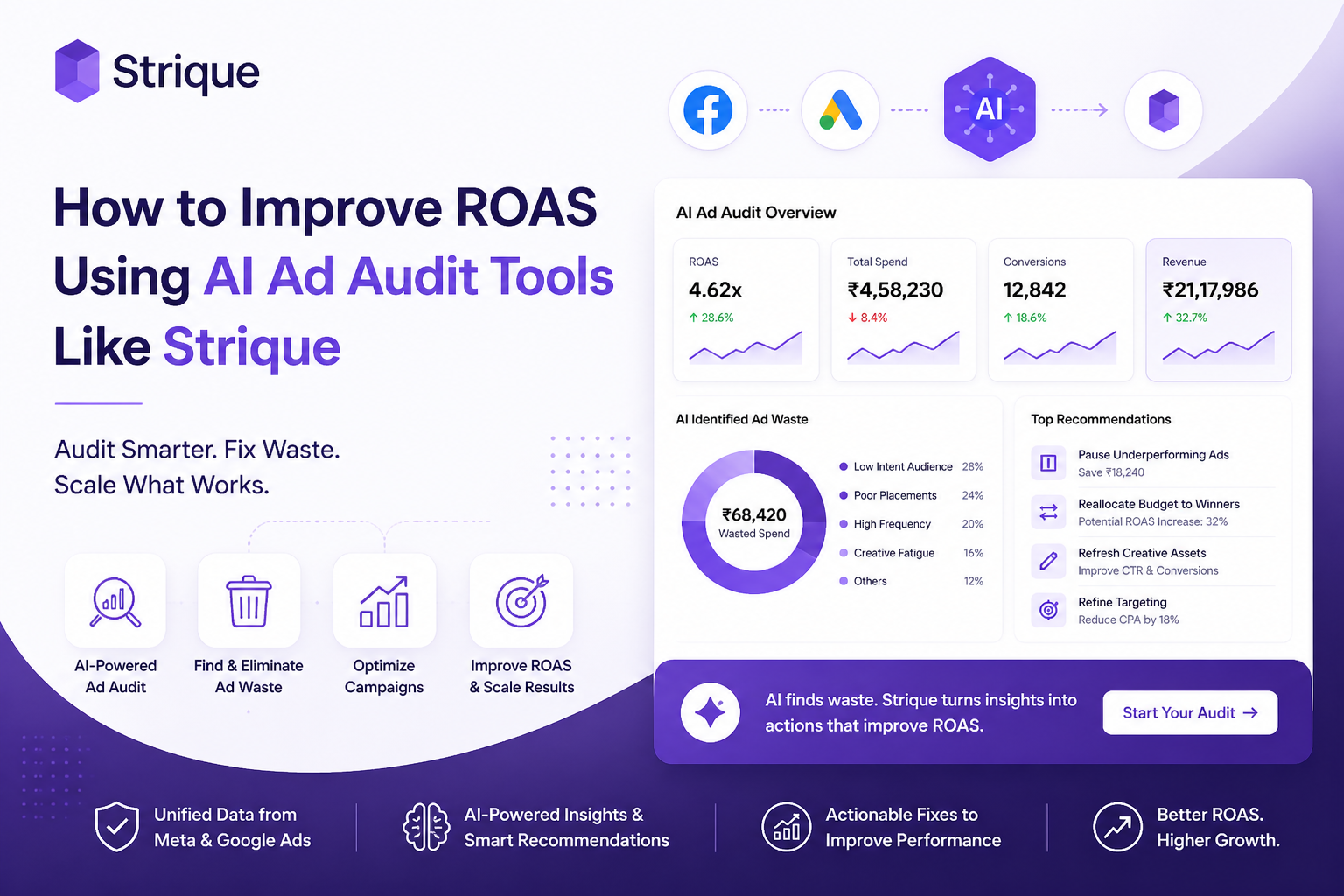
The era when a good ad creative won you the quarter is over. In 2026, a marketer running an AI marketing agent launches 40 creatives in the time a 2022 marketer launched four. The question isn't who can make the asset. It's who can close the loop.
This piece walks through the three levers that actually matter in AI ad optimization: (1) the offer itself, (2) the audience-offer-creative fit, and (3) the speed of iteration between measurement and next ship. We'll show the exact flow we run: agent launches 12 variants, reads back 72-hour performance, kills four, rewrites three, promotes five. And why it outperforms a senior media buyer running a manual test plan every time.
Lever 1: The offer is still king
AI doesn't change what makes an ad work. A weak offer with beautiful creative and perfect targeting still loses. The agent's job is to find which version of your offer resonates with which segment, faster than any human test cadence can.
Where the agent adds value here: it can run 8 to 12 offer variants simultaneously across different audience segments and read back which offer-audience combinations are converting within 48 to 72 hours. A human media buyer running manual tests would take 3 to 4 weeks to get the same statistical confidence. The AI ad optimization advantage is not the creative quality, it's the test velocity.
Lever 2: Audience-offer-creative fit
The most common paid media failure mode is running the right creative to the wrong audience, or the right offer in the wrong format. AI ad optimization solves this with systematic fit testing.
Strique builds audience segments from your CRM's closed-won data, your pixel's purchase events, and lookalike models layered on top. It then matches each creative angle to the audience most likely to respond to that specific angle, not just the broadest possible lookalike. Acquisition cost drops when the message matches the moment.
Lever 3: The iteration speed gap
The gap between a manual media buyer and an AI marketing agent isn't quality. It's iteration speed. A human running weekly optimization cycles ships 4 iterations per month. An AI agent running daily reads and optimizations ships 20+.
Compounding iteration is the moat. An agent that has run 20 optimization cycles on a campaign account knows more about that account's audience, seasonality, and creative fatigue patterns than any human who joined at the same time.
The 2026 ad optimization playbook: set the budget, set the goal, review the weekly Canvas report, approve the big moves. Let the agent run the iterations.