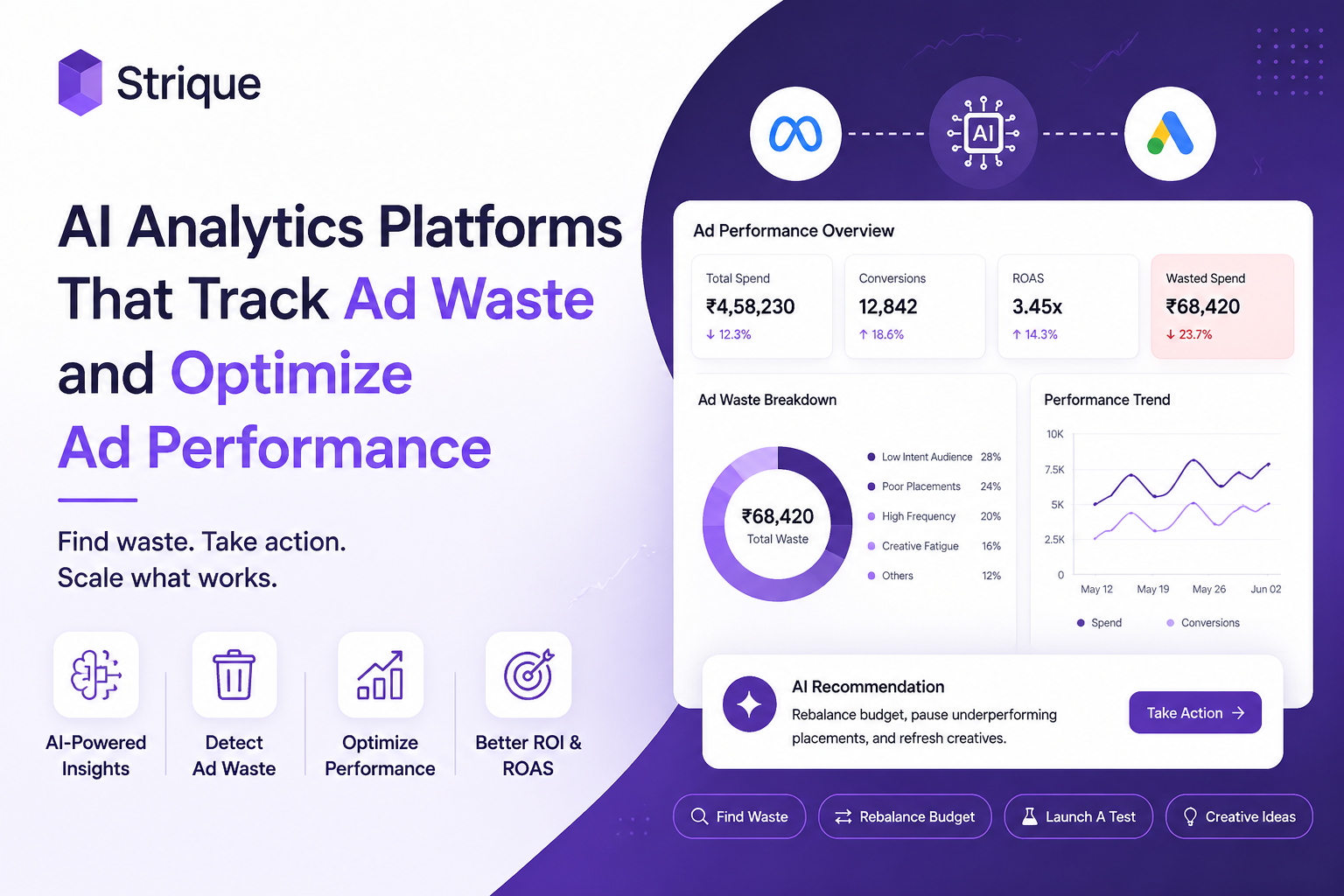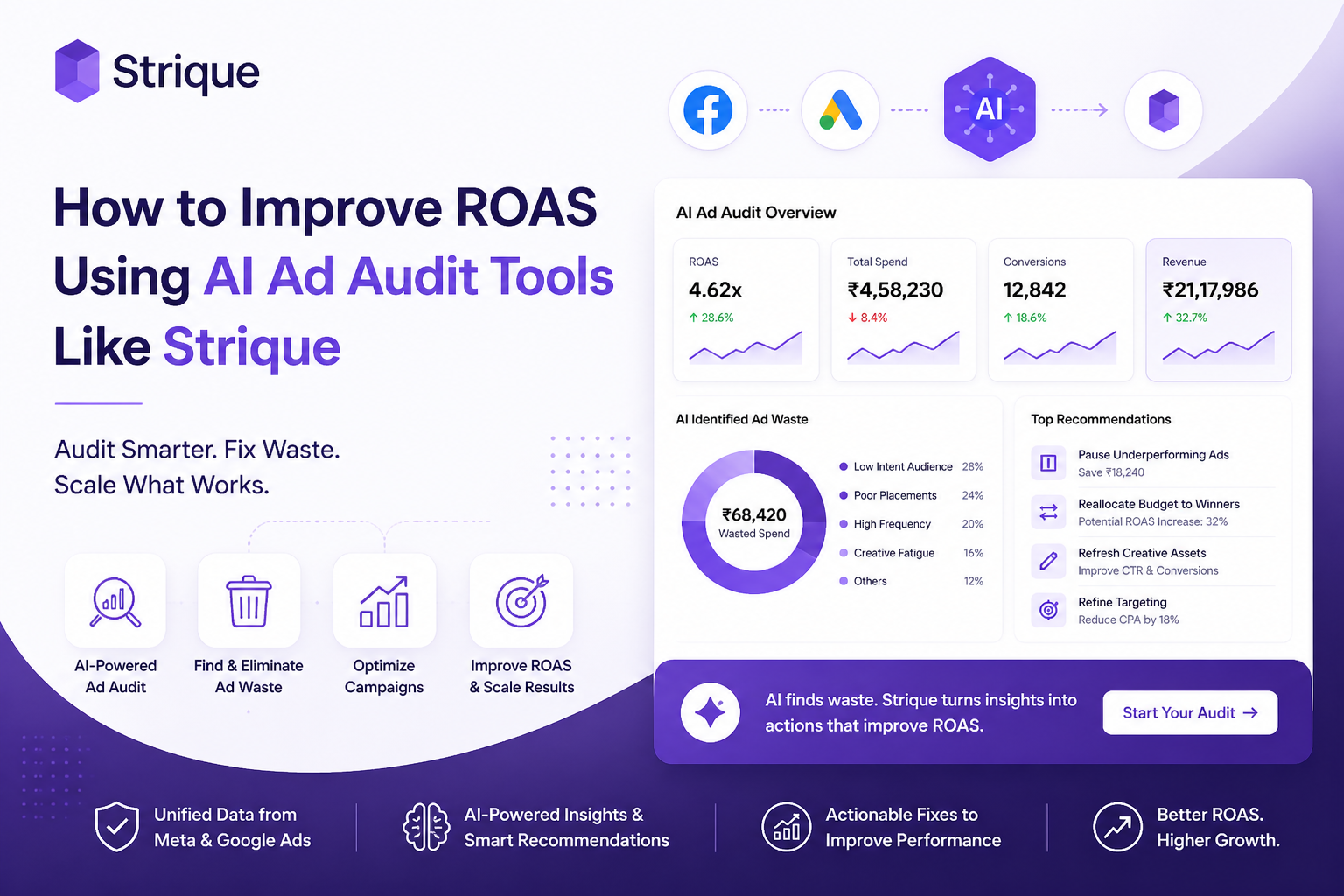
Every AI marketing pitch deck shows the generation part. "Write 100 ads in ten minutes!" Cool. Now what?
The reason AI marketing tools feel like a novelty is that most stop at generation. They don't read back the performance of what they shipped. They don't update their priors. They don't compound. You're left with a very fast content machine that keeps making the same mistakes forever.
This post lays out what closed-loop measurement actually requires: the analytics ingest, the attribution model, the memory layer, and the decision policy that decides what to change next run. It's the boring 90% that nobody builds. That's why it's the moat.
What "closed loop" actually means
A closed loop in marketing is a system that can observe the outcome of its own actions and adjust its next actions accordingly. Every successful human marketing operation has a version of this: you look at last week's numbers, you decide what to change, you implement.
The problem is that humans do this weekly at best. By the time you've noticed a creative is fatiguing and briefed a designer and shipped a replacement, you've wasted two weeks of budget and audience goodwill.
An AI marketing agent operating in a closed loop does this daily, or continuously, depending on the signal. It ingests performance data as it arrives, identifies patterns (this creative angle is fatiguing, this audience segment is converting 40% better than expected, this landing page has a 15-second session time that predicts low intent), and adjusts.
The four components of a real closed loop
1. Analytics ingest: The agent has to be able to read performance data from every channel it touches, not just the last-click conversion, but the full funnel signal: impressions, engagement, CTR, CVR, CAC, ROAS, pipeline influence. Most tools only read one channel's data.
2. Attribution model: When multiple channels are running simultaneously, the agent needs a model for assigning credit. Last-click attribution will always favor bottom-funnel channels and starve top-of-funnel. A closed-loop agent needs to understand the path, not just the last step.
3. Memory layer: The agent's learning has to persist across campaigns, across quarters, across personnel changes. This is the organizational memory that compounds. Without it, every campaign starts from zero.
4. Decision policy: What does the agent actually do with the data? Kill bottom-decile creative after 48 hours? Shift 20% of budget to the top-performing audience? Email the team when CAC crosses a threshold? The policy has to be explicit and tunable.
Strique implements all four. That's what makes it an AI marketing agent and not an AI marketing tool.